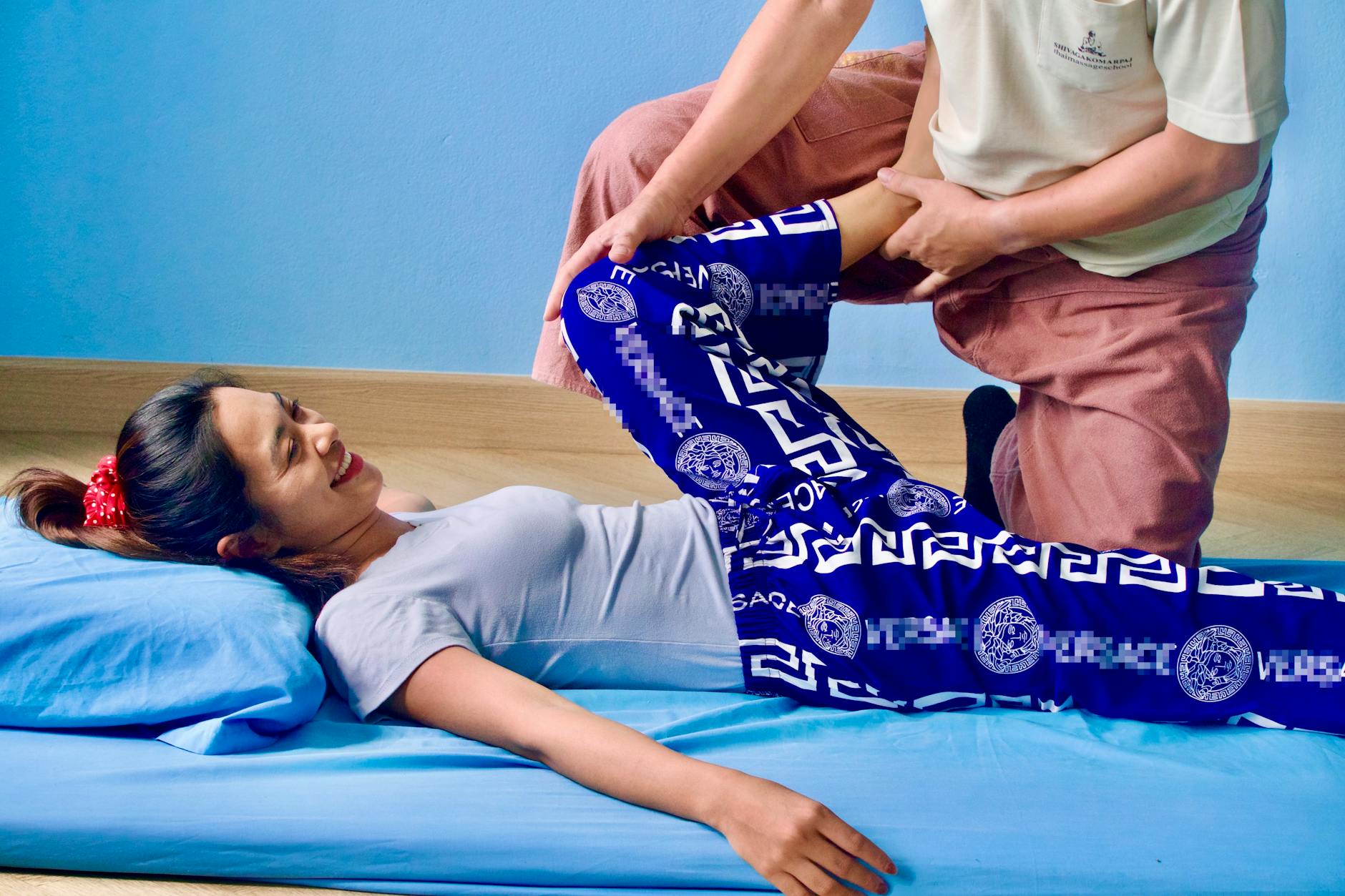
Sciatica is easy to recognise: pain that starts in the lower back, crosses the buttock, travels down the thigh and sometimes all the way to the foot. It can be aching, burning or electric. And very disabling.
Understanding sciatica
The sciatic nerve is the longest and widest nerve in the body. It originates in the lower back (L4-S3) and innervates the entire leg. When compressed or irritated, the pain follows its path.
The most common causes:
- Disc herniation, the nucleus of a disc pushes against the nerve root
- Piriformis syndrome, the piriformis muscle in the buttock compresses the nerve
- Lumbar osteoarthritis, narrowing of the canal the nerve travels through
- Joint restriction, a lumbar or sacroiliac restriction
How osteopathy addresses sciatica
Osteopathy doesn't make a disc herniation vanish, but it can significantly reduce nerve compression by:
- Releasing joint restrictions in the lumbar and sacroiliac regions
- Relaxing the piriformis and pelvitrochanteric muscles through myofascial techniques
- Restoring sacral mobility to decompress the nerve roots
- Improving overall biomechanics to prevent relapse
Acute vs. chronic sciatica
In the acute phase (recent, intense pain): direct manipulations are contraindicated. I work indirectly on the sacrum, legs and surrounding structures to ease tension without making things worse.
In the chronic phase: more complete work is possible, including the lumbar vertebrae, the disc and surrounding tissues.
What you can do
- Stay active, total rest often worsens sciatica. Gentle walking helps.
- Apply heat to the lower back outside inflammatory flare-ups
- Avoid repeated trunk flexion
- Lie down with knees bent to ease tension on the nerve
If you're dealing with sciatica, see someone quickly, the sooner care starts, the faster you recover.