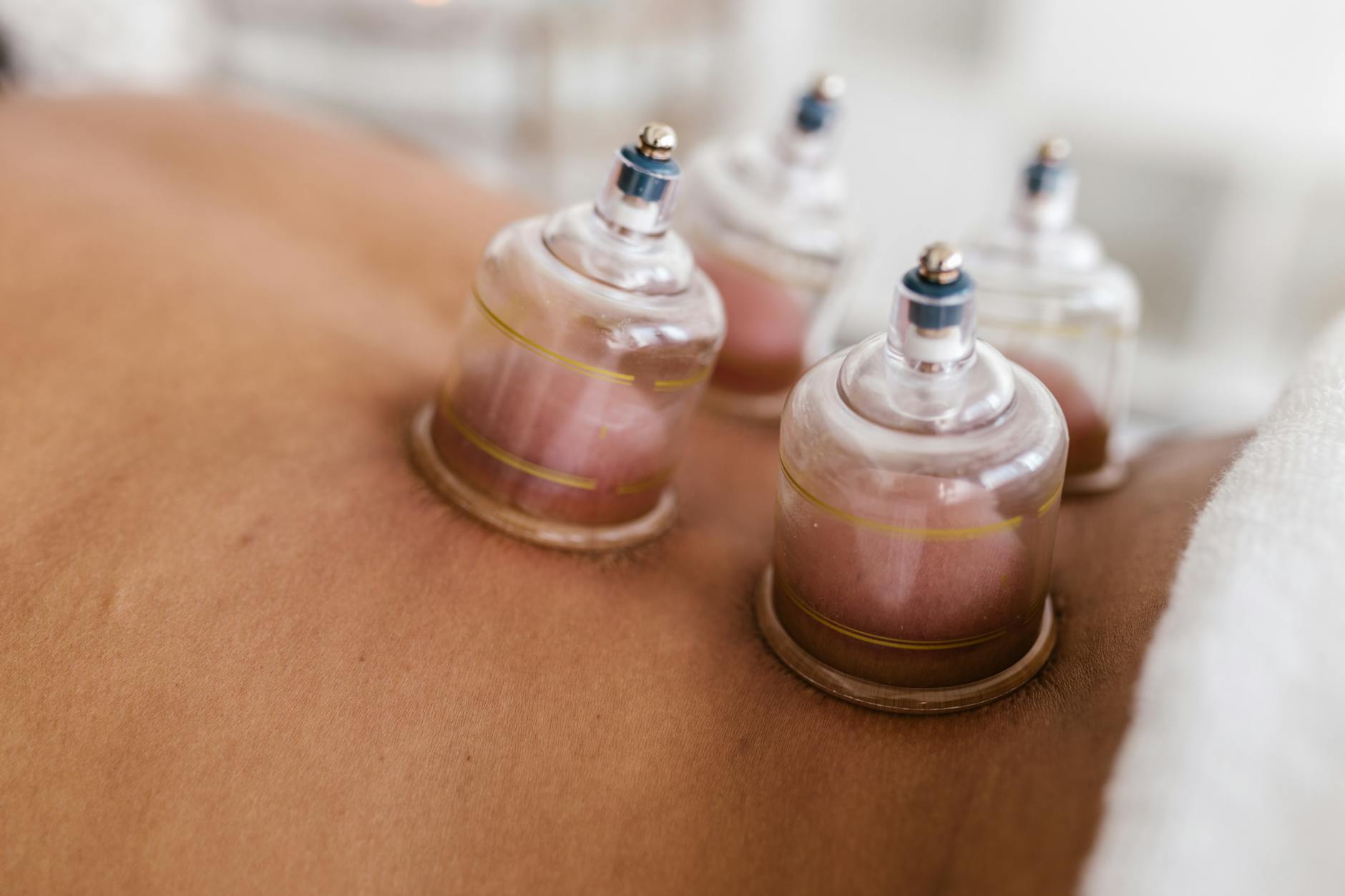
Cupping therapy uses silicone or glass cups to create suction against the skin. Known since antiquity in traditional Chinese and Arabic medicine, it was brought back into the spotlight by elite athletes in recent years.
How does it work?
The negative pressure created by the cup draws the skin and superficial tissues upward. This produces several effects at once:
- Increased local blood flow, better tissue oxygenation
- Release of fascial adhesions, fascia layers that have stuck together separate under the suction
- Lymphatic stimulation, supports the removal of metabolic waste
- Pain relief, through stimulation of skin mechanoreceptors
The purple marks: should you worry?
The round marks left after a session aren't bruises. They're circular ecchymoses caused by blood stasis in the superficial capillaries. They fade in 3 to 7 days and are usually not painful.
Static vs. dynamic cupping
- Static, the cups are placed and left for 5 to 10 minutes
- Dynamic (sliding), with oil, the cups glide across the skin like an inverted massage; very effective over broad areas
Main indications
- Muscle pain and tight knots (traps, lower back, calves)
- Tendinopathies and insertional pain
- Bronchitis and respiratory congestion
- Cellulite and fluid retention
- Sport recovery after hard sessions
Contraindications
Not used on: broken or irritated skin, varicose veins, areas of thrombosis, on the abdomen during pregnancy, or in the presence of bleeding disorders.
Cupping is something I regularly integrate into my sessions when muscle tension runs deep and resists conventional manual techniques.