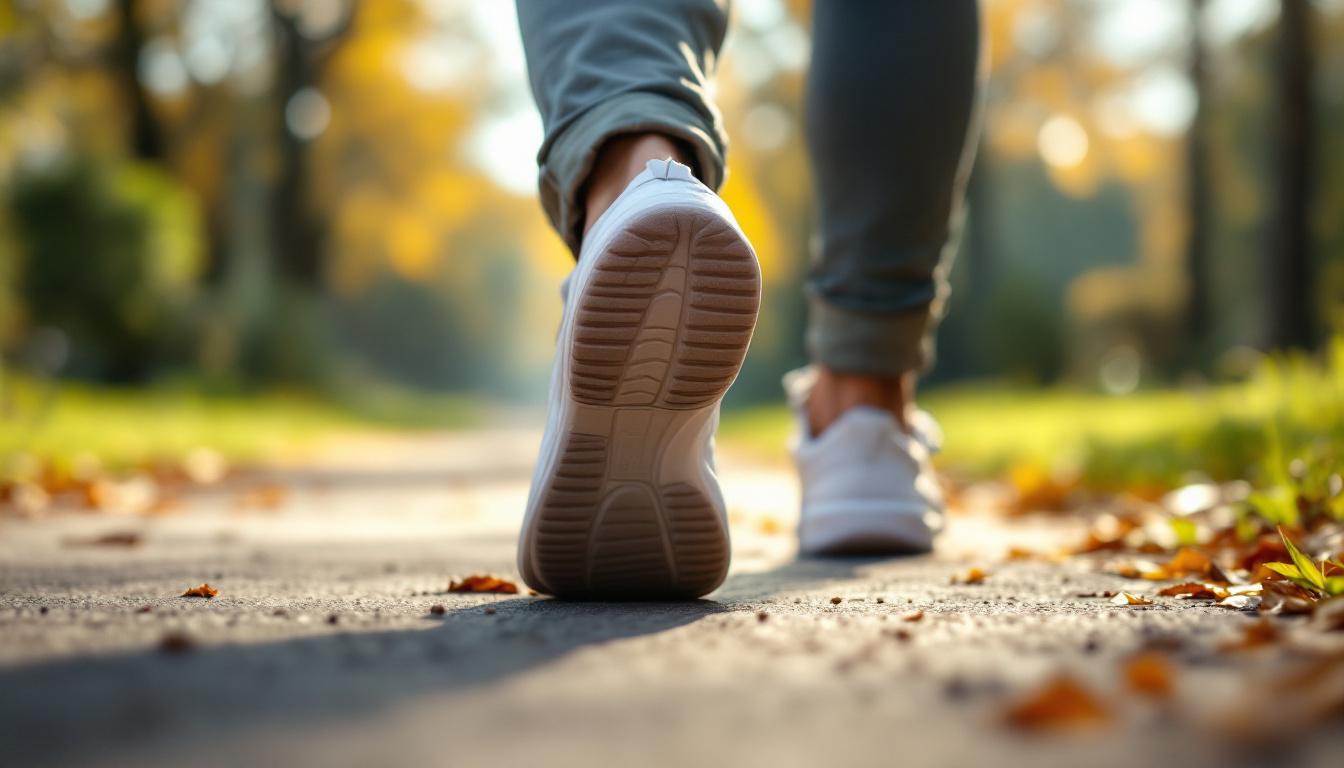
Knee osteoarthritis affects millions of people worldwide, and many find themselves caught between medications with unpleasant side effects and surgery they'd rather put off as long as possible. But what if a very simple change in the way you walk could make a real difference?
A recent one-year clinical trial produced striking results: slightly adjusting foot angle during walking reduced joint pain as effectively as common anti-inflammatory medications, and also slowed cartilage breakdown inside the joint.
Why Your Foot Angle Matters So Much
Every step we take generates compression forces that travel through the knee. The direction your foot points directly influences where those forces land inside the joint.
In knee osteoarthritis, the cartilage surface is often more damaged on one side than the other. By subtly changing foot orientation, typically turning it slightly outward, some of that load shifts toward less affected areas.
This principle of redistributing mechanical stress isn't new in biomechanics. What is new is the confirmation that such an accessible adjustment can produce effects comparable to medication over the long term.
What the Clinical Study Found
Participants learned to consciously modify their foot angle while walking. After one year of follow-up, researchers observed:
- A significant reduction in knee pain comparable to that achieved with common medications
- A slowing of cartilage degradation inside the joint
- Sustained maintenance of the walking adjustment throughout the study, showing the change is manageable in daily life
These findings are especially encouraging because they suggest we can act on joint mechanics without resorting to invasive treatments.
The Osteopathic View on Walking Biomechanics
As an osteopath, I pay close attention to how patients walk during every assessment. The way you place your foot, how your knee aligns over your hip, how your pelvis stabilises with each step, all of this forms a continuous mechanical chain.
Knee osteoarthritis rarely occurs in isolation. It usually develops in the context of:
- Global postural imbalances (pelvis, lumbar spine, hip)
- Asymmetric muscle tension in the hamstrings, quadriceps, or calves
- Joint stiffness upstream or downstream (ankle, hip) overloading the knee
- Compensatory walking habits that have built up over months or years
Correcting the foot angle alone can provide relief, but addressing the entire mechanical chain leads to deeper, longer-lasting results.
What I Do in Consultation for Knee Osteoarthritis
When a patient comes to me with knee osteoarthritis, I always start with a global assessment: posture, hip and ankle mobility, lumbar spine, and the knee joint itself.
Depending on what I find, I will:
- Work on joint mobility restrictions around the knee, hip, and ankle
- Address muscular and fascial tensions creating abnormal stress on the cartilage
- Treat the pelvis and spine if I detect postural compensation patterns
- Offer practical walking advice, including foot angle adjustments similar to those studied in this research
The goal isn't to cure osteoarthritis, once cartilage is damaged, we can't reverse it with the tools available today. But we can very often reduce pain, improve mobility, and significantly delay disease progression.
A Message of Hope for Patients in Pain
What this study confirms is something I see regularly in practice: the body has a remarkable ability to adapt when given the right tools.
If you suffer from knee osteoarthritis and dread the prospect of surgery, know that there are often effective alternatives worth exploring first. Movement, mechanics, posture, these are concrete, accessible levers, increasingly supported by scientific research.
If you're in Tel Aviv and would like to assess your walking biomechanics or find relief from knee pain, I invite you to book a consultation. Together, we can build a strategy tailored to your situation.