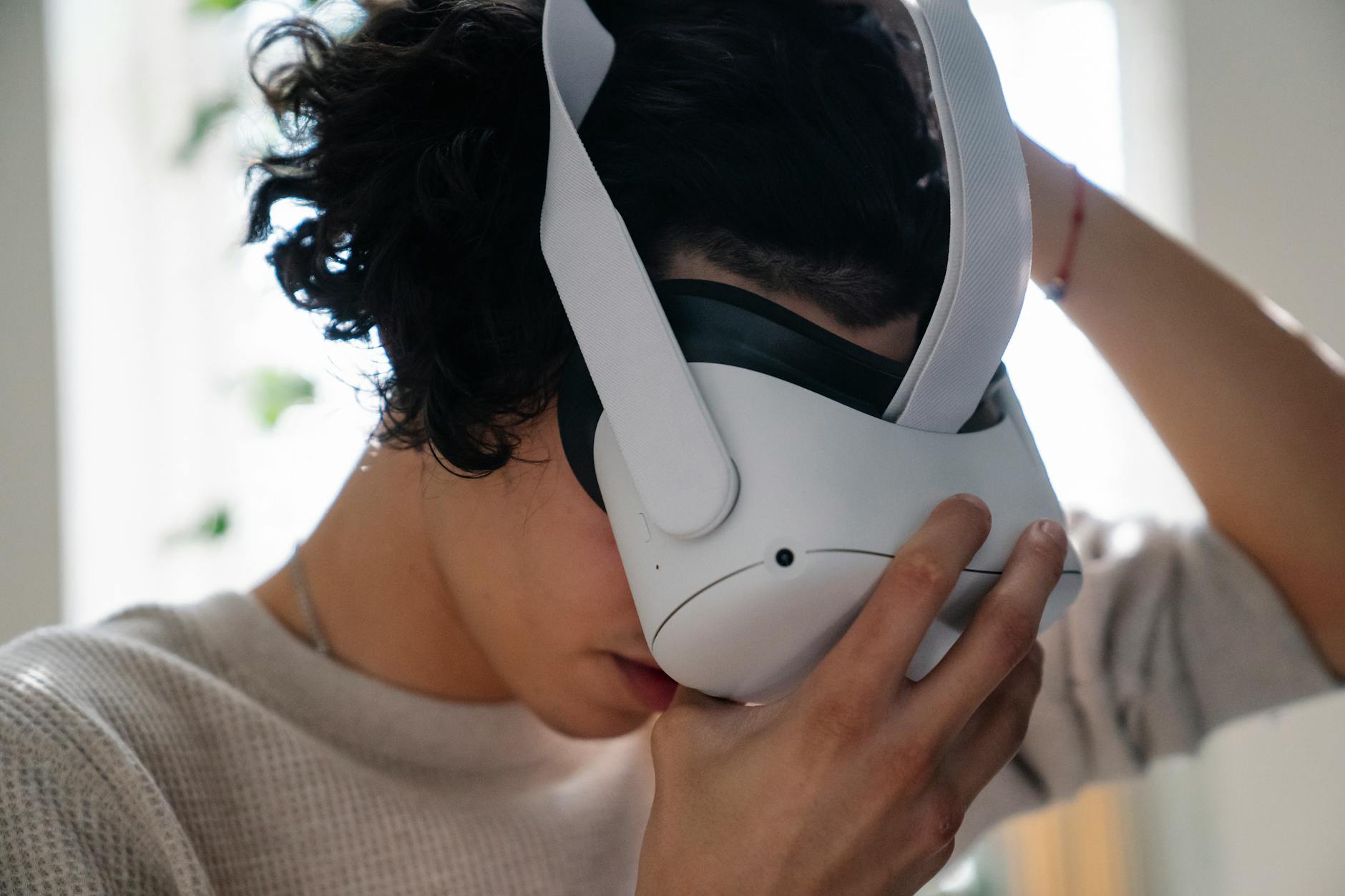
Pain is not simply something that happens in a muscle or a joint. It is, above all, what the brain decides to feel. A recent study from the University of Exeter confirmed this in a striking way: by immersing participants in 360-degree virtual nature environments, a forest, a waterfall, researchers significantly reduced pain sensitivity, nearly as effectively as a conventional painkiller.
As an osteopath, I find this discovery deeply compelling. It illustrates something I observe every day in practice: pain is a signal constructed by the brain, and that signal can be modulated.
What the Study Found
Participants wore VR headsets displaying immersive natural scenes. The more present they felt in the virtual environment, meaning the more their brain «forgot» it was in a lab, the higher their pain tolerance became.
Brain scans showed that these nature scenes activated the brain's own natural pain-regulation circuits. In other words, nature, even simulated, triggers a real biological response.
This is not magic, nor simple distraction. It is measurable neurological modulation.
Why Does the Brain Respond to Nature?
Our brains evolved over millions of years in natural environments. Green landscapes, flowing water, and forest sounds activate areas associated with safety, relaxation, and recovery.
When the nervous system perceives a «safe» environment, it reduces its alert level, and with it, the intensity of pain signals. This is exactly the same mechanism that explains why:
- Stress amplifies pain
- Relaxation reduces it
- A relaxed patient recovers faster after an injury
In osteopathy, a large part of my work involves creating precisely this state of nervous system safety, through touch, breathing guidance, and the therapeutic environment of the session.
What This Changes About How We Understand Pain
For a long time, pain was treated as a purely mechanical problem: something is damaged, you fix it, the pain goes away. But two decades of research, and this study is one more illustration, show it is far more complex.
Pain is an experience produced by the brain from multiple inputs: tissue signals, emotional state, stress level, social context, and even visual and auditory environment.
This does not mean pain is «all in your head» in a dismissive sense. It means pain is modulable, and that non-pharmaceutical approaches can have real, measurable effects.
What I Take Away for My Practice
I don't prescribe VR headsets to my patients (not yet!). But this study reinforces principles I already apply in my practice:
- Environment matters: a calm room, soft lighting, and soothing music are not details, they are therapeutic tools.
- Osteopathic touch activates the same circuits: the deep relaxation induced by certain manual techniques travels through the same neurological pathways activated by virtual nature.
- Explaining pain reduces pain: understanding why you hurt, and how the brain participates, is itself analgesic.
- Breathing and mindfulness are powerful allies I often incorporate at the end of a session.
If you are living with chronic or acute pain and are looking for a whole-body approach that addresses not only your joints but also your nervous system, I invite you to book a consultation. My practice is located in Tel Aviv, and I welcome French-, English-, and Hebrew-speaking patients.
Pain is not inevitable. The brain can learn to modulate its intensity, with or without a VR headset.